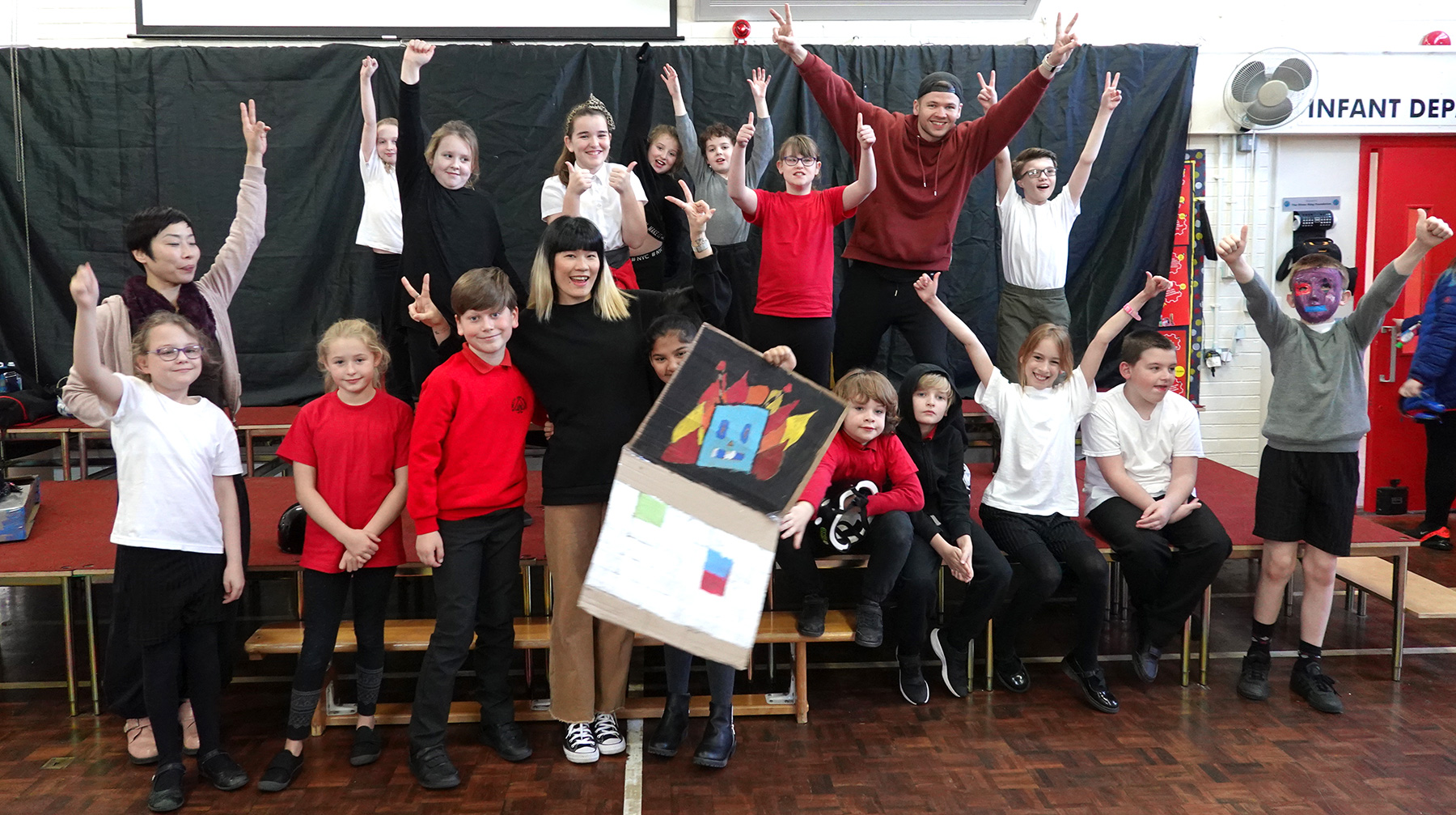
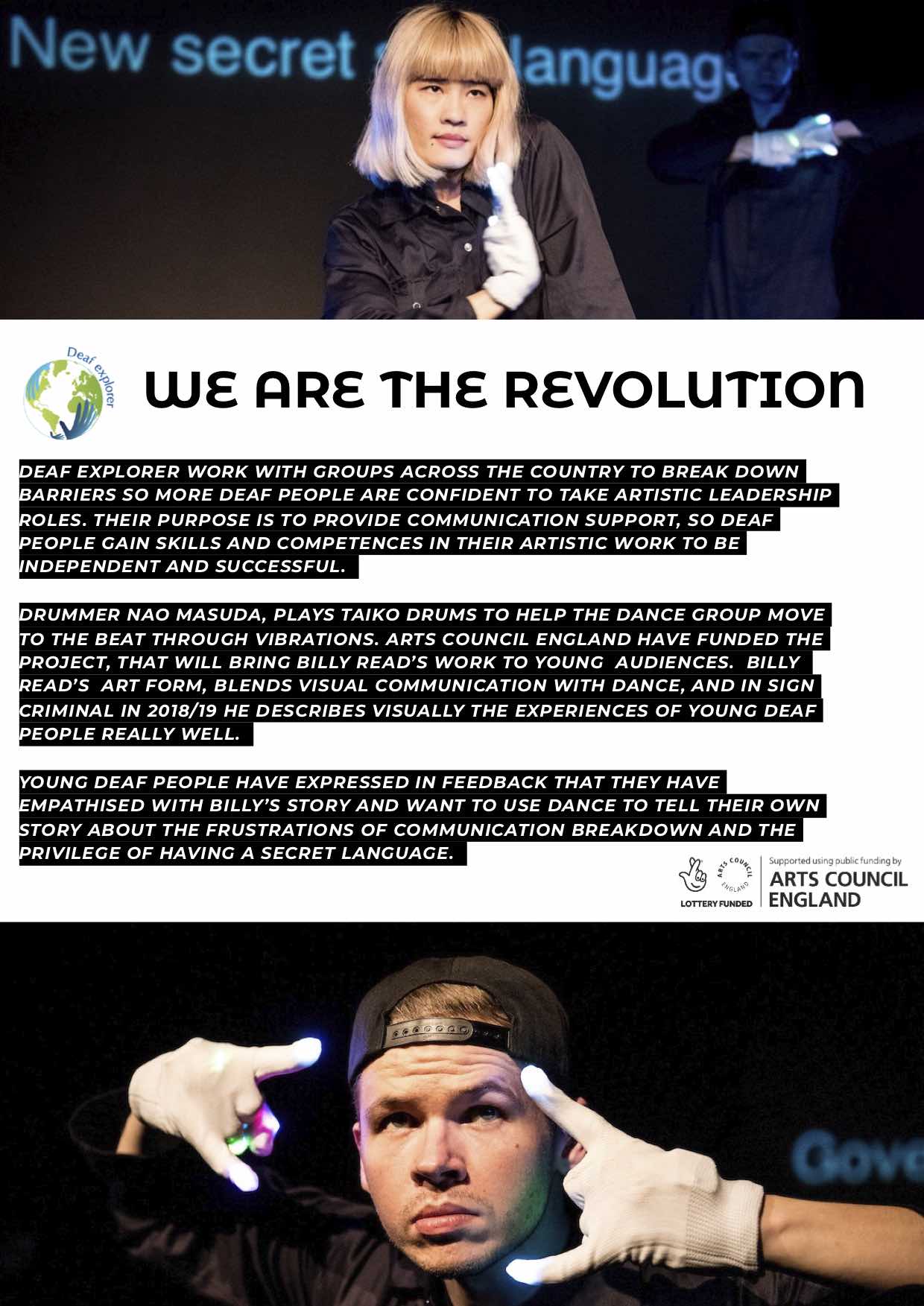
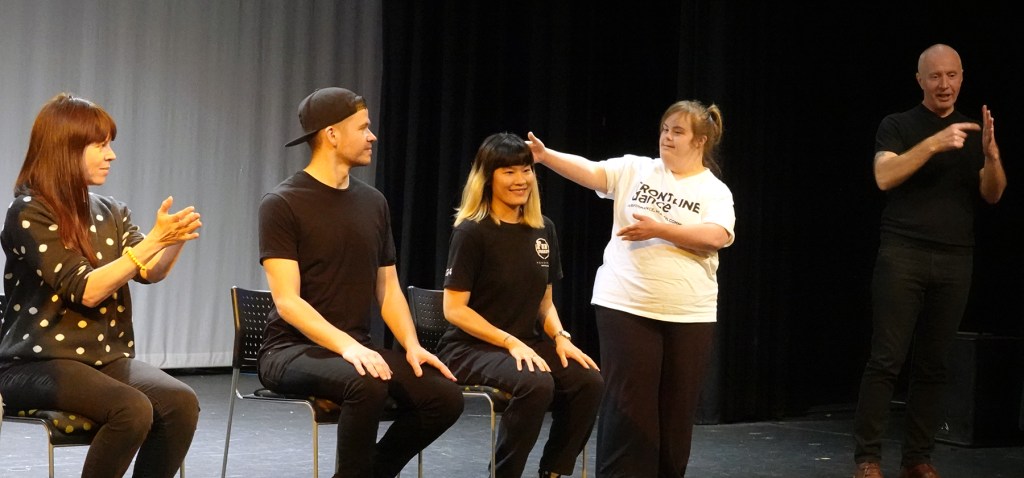
On Monday 25th November Artistic leader Billy Read, Musician Nao Masuda, and Dance leader Ariel Fung presented “We Are The Revolution” at Knotty Ash Primary School, delivering a “transformational” week long residency at the school, bringing together Deaf and hearing children for a co-designed performance on Friday 22nd November to the whole school of 500 pupils and parents of Deaf children.
On Monday 25th November Artistic leader Billy Read, Musician Nao Masuda, and Dance leader Ariel Fung presented “We Are The Revolution” at Knotty Ash Primary School, delivering a “transformational” week long residency at the school, bringing together Deaf and hearing children for a co-designed performance on Friday 22nd November to the whole school of 500 pupils and parents of Deaf children.
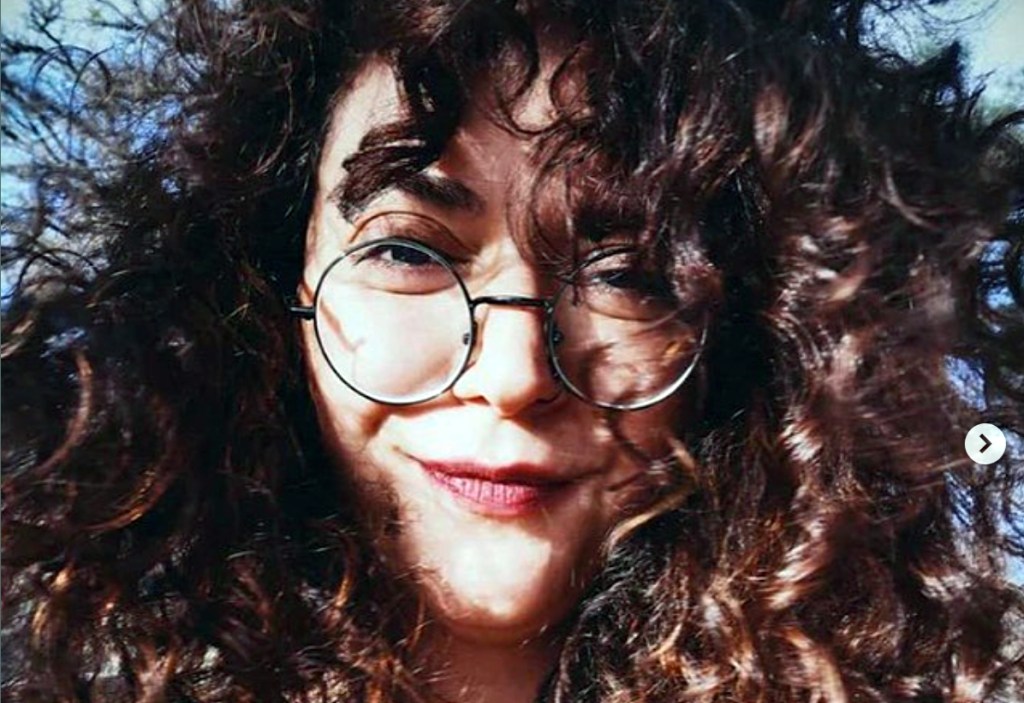
Maral Mamaghani successfully applied in August 2019 for DYCP (Developing Your Creative Practice) to rent a studio to focus on making using human hair as signature material for jewellery and sculpture, working with refugees and asylum seekers.
Maral Mamaghani is a Deaf Iranian artist, using British Sign Language, who explores the barriers that she encounters in everyday life; being female, Deaf and a refugee.
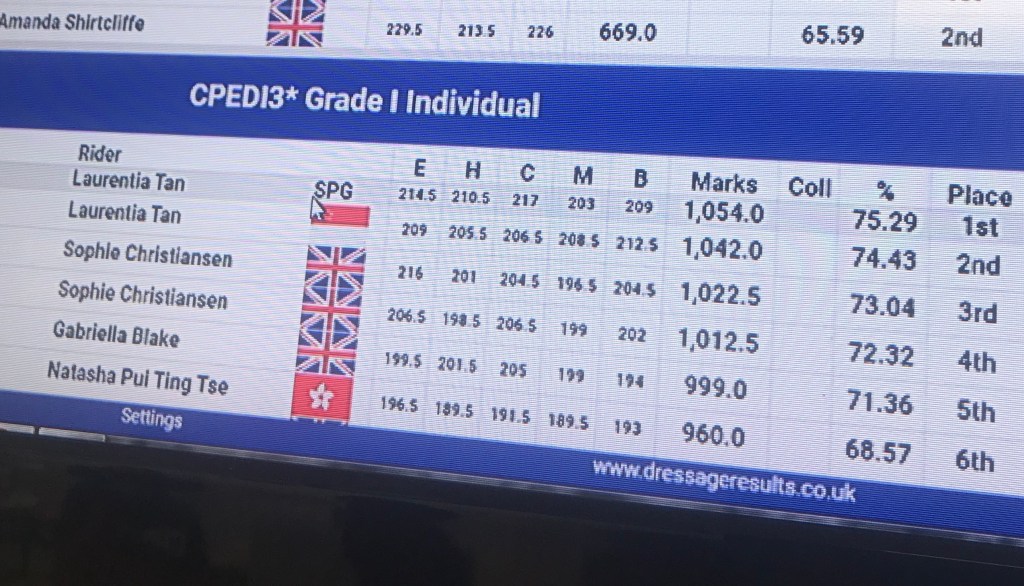
Find out how composer and musician Ruth Montgomery is using her Audiovisability project to collaborate with musicians, visual artists and technical experts to support Para Equestrian Laurentia Tan to live her dream and win a Gold medal at Japan’s 2020 Olympics. Laurentia’s Dressage performance at the trials in Keysoe (pictured above) prove all going to plan!
Audio visibility is founded by and artistically led by Deaf Musician Ruth Montgomery.
Projects by Audio visibility connect all the senses to music by employing the skills of a range of visual artists, performing artists, musicians and technology experts manufacturing vibrio tactile and haptic equipment.One outcome, of many for audiences and participants; is that the creative process enable’s Deaf people to understand all the aspects of music and get involved in music events.Ruth Montgomery creates music projects for a range of artists to collaborate. For the Dressage R & D, Ruth collaborated with musician and composer Evelyn Glennie, Composer Tom Hunt, Visual artist Melissa Mostyn and to support her access to the delivery of the project Film-maker Louis Neethling. The Dressage R&D confirmed the principal theories of Audio visibility. Dressage was the conduit that transformed all the Audio Visibility theories into practice giving a coherent purpose to all involved, importantly to the non arts based partners: the Singapore Equestrian team and Sub pac the vibrio tactile company.Involving Deaf Para Equestrian Laurentia Tan, moves Audio visibility on by leaps and bounds because Laurentia presents robust and real problems to solve by Ruth’s artistic team, moving Audio Visibility away from describing what it is like to listen to music, to actively involving the collaborating artistic team to remove the barriers for Laurentia so she can improve her performance in Olympic competition and overcome her disadvantage due to her deafness.Here’s the back ground and context Laurentia’s problem. deaf Para equestrienne Laurentia Tan has never heard the music that she uses to train with her horse and for competition. She relies on the Sign Language interpreter letting her know when the music has begun. Before Ruth Montgomery’s artistic intervention on the Olympic sport of Dressage Laurentia had no say, control or involved in music decision making. She would live in the hope that her routine would match the timing and length of the music. Ruth has boosted significantly how Laurentia relies on hearing people to inform her and describe the sounds of music by increasing the expertise involved and bringing to the sport use of vibrio tactile and haptic technology.
During the R & D Ruth Montgomery Is driven by her unique experience as a successful deaf musician and music teacher, In 2019 one of her students is shortlist for BBC young musician of the year. Ruth’s aim is to implement the theory that music is possible to grasp for many deaf people. The creative ethos through out the R & D was to share, create and work with others. This opened up many new connections with partners, exciting new artistic gaols and the need for the development of new technology and adaptations that will be explored in the next stage of project, that all of the partners want to invest time, cash and support.
Saturday early evening 6 pm – 9 pm activities all welcome workshops and performance, refreshments.
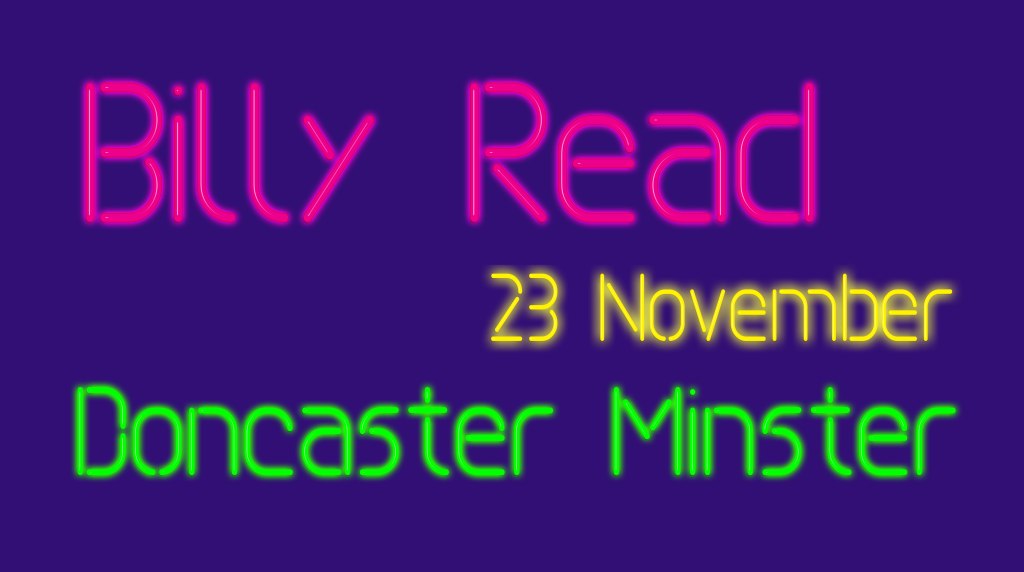
A special performance event on Saturday 23 November when Deaf poet Raymond Antrobus who won the Ted Hughes award for Poetry in 2018, will perform alongside local writers.
Deb Pugh
That will be followed by a totally unique performance by Deaf Explorer dance artist Billy Read of “We are the Revolution” based on a series of workshops, in collaboration with Deborah Pugh, a Movement artist.
Billy and his team will transform the Minster into a night club and create an atmosphere for their street dance performance.
Billy Read and his Team are rehearsing at XP school in Doncaster, giving the pupils an insight and experience into making a new dance commission.
Tickets for the poetry and dance performance evening on the 23rd November are available from November 4 by visiting: https://dnpulse.eventbrite.co.uk
Doncaster Minister is set to be turned into an audio-visual experience for Deaf people for six days in November.
The centre piece of this year’s DN Festival will be an audio-visual piece called ‘Tetonic’, bespoke to Doncaster Minster that uses 3-D light mapping and projection techniques.
Tetonic, using the light projections will be a totally immersive experience covering the ceiling and walls of the iconic Minister building. Created by NOVAK, working with artist Ed Carter, and commissioned by Right Up Our Street, the piece aims to encourage Yorkshire’s Deaf community to experience and get more involved in the arts.
NOVAK are a creative studio producing innovative and ambitious art and design projects, specialising in motion design and immersive experiences, encompassing projection mapping, art and museum installations, stage visuals for music artists and video accompaniments for theatre and dance performances.
Sally Lockey, project director at Right Up Our Street said: “We are so excited to be bringing this bespoke event to Doncaster.
“We’ve worked closely with Doncaster Deaf Trust and Communication Specialist College Doncaster to develop an event that their Deaf students, staff and their families will all be able to enjoy.”
“Normally people think about accessibility for Deaf people after events have been developed.”
This event has been developed with Deaf people at the forefront of our minds. It will be accessible and enjoyable for all audiences, hearing or Deaf.
“Using 3D mapping and projection techniques visitors to the Minster will be immersed in this light led experience covering the ceiling and walls of the iconic building,” added Sally.
Thank you FrontLine Arts Festival for a Wonderfull reception for Billy Read premier of Dance. Ariel Fung a star. Amazing participation piece. Privilege to have talent Alex Zangi
Thank you FrontLine Arts Festival for a Wonderfull reception for Billy Read premier of Dance. Ariel Fung a star. Amazing participation piece. Privilege to have talent Alex Zangi
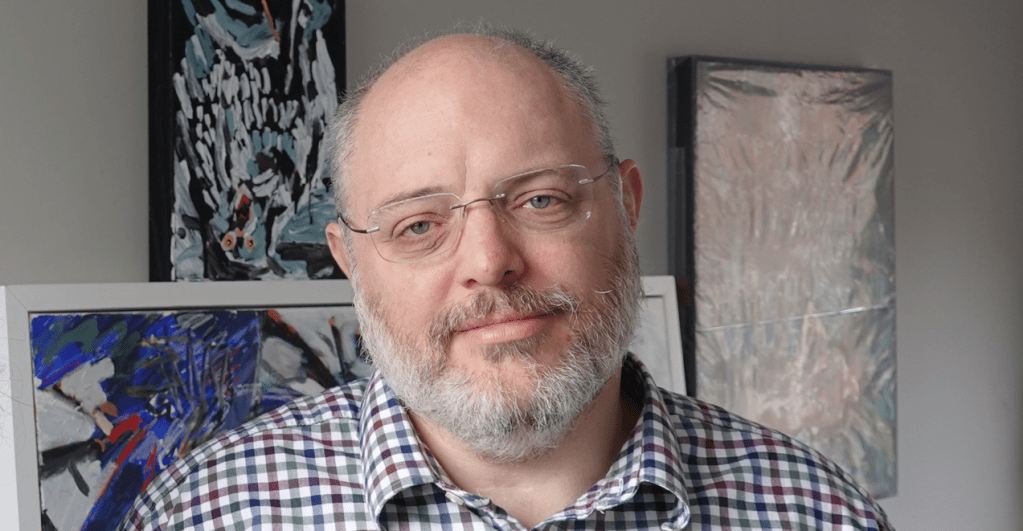
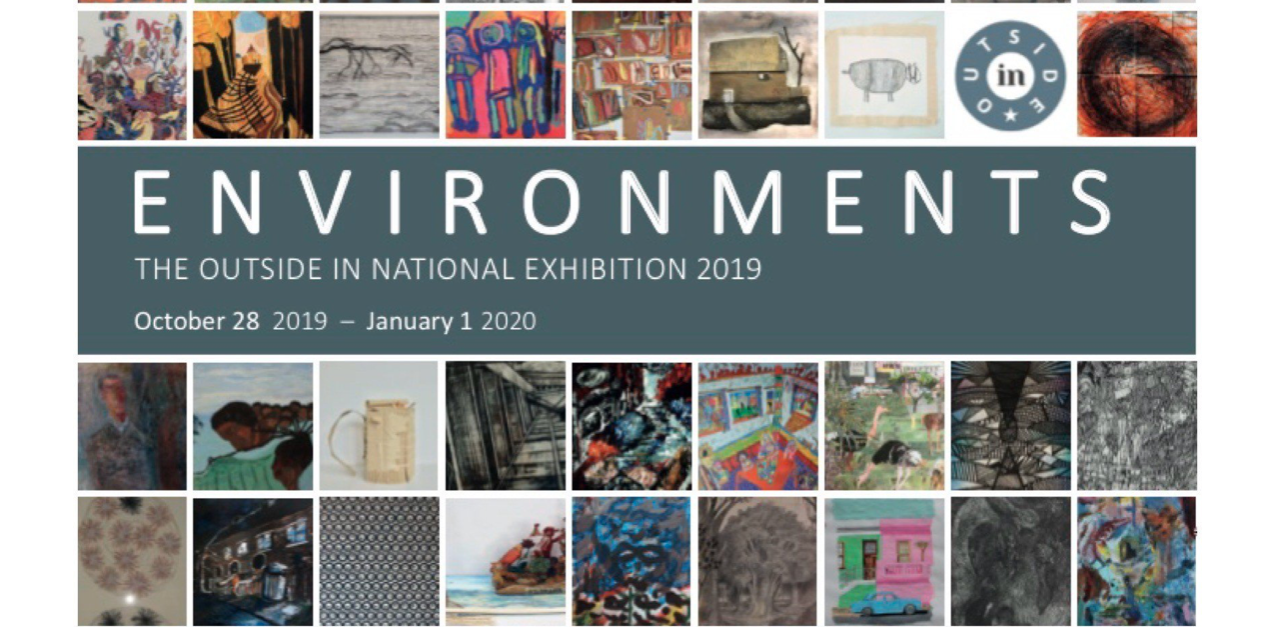
Finn reports on his night in London! Recovering from the Private Viewing of Outside In..What shocks me was the sheer size of the exhibition.. The noise was deafened.. The size was huge.
I admit, I was overwhelmed by this.. and the imposter syndrome kicked in big time. Walking around in daze, Victoria my wife being “half full” kind of person was very gushing and embracing all this; while me being cynical, dismissing and questioning about why my work was selected, after seeing another amazing art work.. It was viciously confusing..
I was pretty desperate to drink myself silly to relax, I couldn’t find the drink department !
Before leaving to catch the train back home.. I went to my art work to say “goodbye”. I looked at my work, I turned around to see where Victoria was then I turned around back to my work, the red dot appeared. A shock hit me. I staggered around thinking where and when did that happen? Who had just stuck the dot on ?.. Who was the buyer ?.. Was it a she or a he and close by? Should I say “thank you “to the buyer.. It was chaotic confusing.. Thinking about my future as an artist..I know I am still “new” in this artworld..but excited to show my art work more.
Background information on the making of a monologue by Deaf Theatre maker Rinkoo Barpaga, that aims to tour in Autumn 2020 Spring 2021. The performance will be presented at CARAVAN International showcase at Brighton Festival in May 2020.
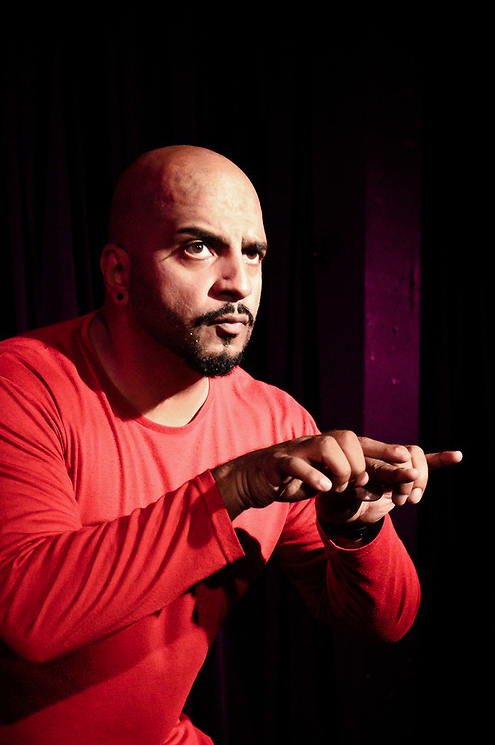
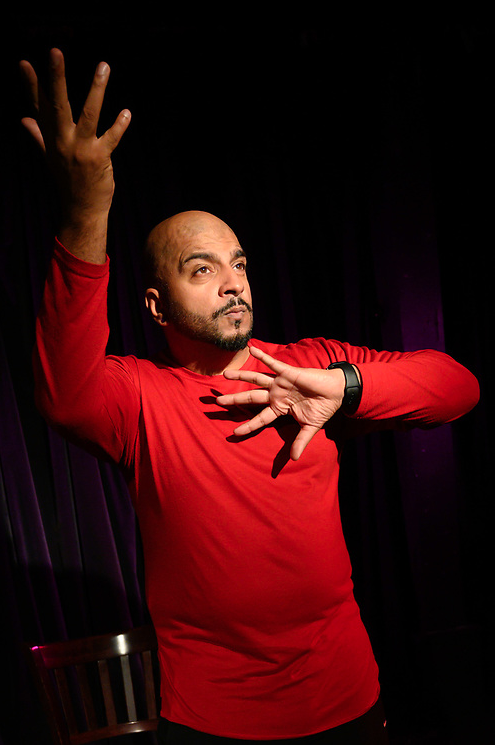
Principal use of Arts Council England grant was to provide Rinkoo Barpaga with funds for his access, so he could participate on The Birmingham REP’s Foundry for emerging theatre makers in the West Midlands equally with hearing peers who have higher education qualifications and theatre training. Rinkoo set out to tell the story of South Asian Deaf living in Britain. He has done this with his new play. He has created a monologue. The title “Made in India Britain” The play lasts 1 hour 10 minutes. The play was directed by Daniel Bailey, who is now Associate Director of Bush Theatre London. Rinkoo was mentored by playwright Andrew Muir. The play was written using a process that involved Writer Andrew Muir and Director Daniel Bailey. Andrew guided Rinkoo to tell his story. Rinkoo told him his story in his first language of BSL. Using a BSL interpreter to translate Rinkoo’s BSL Andrew noted down Rinkoo’s words. Andrew has worked for many years with Deaf creatives that use BSL. Andrew Muir can use BSL and communicate socially with Rinkoo. Andrew typed up Rinkoo’s stories. He sent them by email to Rinkoo and Rinkoo commented and made changes. This process was done between late July, August, September, October, November 2018. In September Andrew and Rinkoo spent a week in Leicester at Attenborough Arts Centre combining the written text with BSL performance. Before this intensive week of work, Andrew Muir and Daniel Bailey concluded that the play should return to the first language of BSL so that Rinkoo can perform the play. The rehearsal in Birmingham in October was completed with BSL interpreter Kam Deo who provided voice over for Rinkoo Barpaga. The rehearsal process was about translation from written English back into BSL and dynamic performance of Rinkoo Barpaga’s story. Daniel Bailey focussed on cutting down the story to create a story arc. The play was presented at the Birmingham REP in November as part of the Foundry Festival for New emerging theatre-makers in the West Midlands. Later in the month of November Rinkoo presented a shorter version of the play at Birmingham’s Deaf Cultural Centre to a Deaf audience with a BAME majority audience. Many in the audience were aged between 16 – 25. Feedback from the diverse Deaf audience was excellent. Rinkoo was ill after these two performances so he cancelled the shows he planned at Attenborough Arts Centre, Leicester and STUN at Z-Arts in Manchester. In March 2019, Rinkoo presented the play at Camden Peoples Theatre for the Sprint Festival, 90% of the tickets sold and the performance received excellent feedback from Deaf Audiences. Rinkoo Barpaga visited Deaf families and communities in India. Rinkoo identified a South Asian promoter in Birmingham and a South Asian promotor in Leicester. The promotors organised gatherings of the academic and artistic Sikh, Indian and Pakistani community. Rinkoo told his deaf story at the gatherings and shared food and stories with people who attended the meetings. The research focused on intersectionality: Deaf and Indian, Learning British Sign Language and going to a Deaf school and College, Rinkoo’s relationship with his father, living in different parts of Britain & travelling around the world searching for a home.
Audience Feedback describes Rinkoo’s achievement “Rinkoo told his story with an engaging mix of humour, characterisation & first-person narrative. Really Effective, Really Enjoyable.” The project focussed on R&D and Professional development. The aim was to provide Culturally Deaf artist Rinkoo Barpaga, who uses British Sign Language the opportunity to write his own play. In 2017, Rinkoo made “Am I funny” The life and signs of a Deaf comedian” Rinkoo worked with a number of hearing playwrights, and felt he did not have ownership of the creative process. In this project, Rinkoo wanted to tell a contemporary urban Deaf story. Audience feedback said “Like the representation of deaf different background experience in Uk” Rinkoo was mentored by playwright Andrew Muir. Andrew’s process is to ask emerging writers real life questions, Rinkoo found the questions unexpected. The result of this process was many stories, and lots of material for the rehearsal studio. Two questions came out of the research: 1)Who am I, 2)Where do I belong. The questions also overlapped. Using this research Rinkoo went into the “Rehearsal process”, to find and make the play, this was a new and demanding experience for Rinkoo Barpaga. His artistic and access team of Interpreters acted as critical friends continually challenging Rinkoo so he could find the play, Made in India Britain amongst many other stories Rinkoo wanted to tell. In preparation he devised scenes that would entertain his audience. He saw these scenes as distinct and not part of a whole play. He created dynamic scenes with vibrant characters, he used his process for making Stand up comedy. When Rinkoo worked in the rehearsal studio with Director Daniel Bailey this process was critiqued and Daniel Bailey cut out scenes that did not answer the two questions. Rinkoo learnt that making theatre was not the same as making stand up comedy. He learnt when to use his stand up comedy skills when making theatre. Audience Feedback said, “Love how you add humour into sad story” He learnt about making theatre with a story arc. This feedback from audience captures Rinkoo’s learning on this project that transformed Rinkoo from Stand Up comedian to emerging playwright. “It is visual – flowed from one story to the next. You had a theme running through that linked your experiences” Later in the Rehearsal process Director Daniel Bailey moved towards one question to give the play greater focus for the audience. Rinkoo learnt that a scene that made people laugh or that was emotionally poignant could be cut if it did not have a connection or answer the question. By using the subject of himself to write a coherent play Rinkoo learnt an entirely new creative process. Daniel Bailey said that if Rinkoo wants to perform one-man show he has to stick with one interpreter for voiceover throughout rehearsal also on the stage. The creative process is so much about the language – BSL & urban sign language, it is this language that is celebrated and represented in front of audiences. Rinkoo learnt his theatre making process is not about aping English script writers, but involving a creative team that includes experienced access workers. Rinkoo says, “I have learnt so much throughout a year for the develop script and rehearsal.”
On the first day of the Studio Development that would transform Rinkoo Barpaga’s script into a piece of theatre Daniel Bailey said, “You are now going to make work for an historically under represented audience, you are the person with the lived experience to do this” The rigorous critique by Daniel Bailey challenged Rinkoo Barpaga, leading the Deaf artist to depend less on the support of note taker Andrew Muir & drive forward the creation of Rinkoo Barpaga’s BSL script rather than dependency on English script. Daniel recognised the importance of Rinkoo Barpaga’s first language to be central to the creative process as well as the acting of Rinkoo Barpaga. The research period was prolific with Rinkoo mining his past experiences, especially the memories of discrimination and the impact on Rinkoo Barpaga’s psyche. It’s a Deaf story about double discrimination that needed to be told. The 1 to 1 support that Daniel Bailey gave to Rinkoo Barpaga enabled Rinkoo to learn about making theatre. Rinkoo tells one story, & delivers one play for audiences. This ground breaking for Rinkoo who writes stand up comedy for instant reactions from the audience. The difference in opinion about editing scenes continued right up until the presentation of the work to audiences at Foundry Festival. Rinkoo found great learning in the editing process, because it greatly challenged how he had made work for audiences before.
The vital interplay & exchange of ideas between Daniel Bailey and Rinkoo Barpaga was mediated by RSLI Rachael Veazey, who because of her theatre making background & training could deliver Daniel Baileys communication to Rinkoo with knowledge and expertise. In her role as Interpreter she emerged out of the studio process as a creative enabler. RSLI Rachael Veazey mediates Rinkoo’s BSL communication with hearing professionals using the hybrid skills of theatre-making and BSL Interpreter. Before going into the studio with Daniel Bailey Rinkoo would work for days on the project with RSLI Rachael Veazey. Rachael used the time to reinforce Daniel’s communications and give Rinkoo greater opportunity to professionally develop his practice. The involvement of creative enabler Rachael Veazey was approved by Daniel Bailey. Also regular planning meetings with Deaf Explorer (with phone calls using Interpreter) enabled Rinkoo to successfully manage the project. Rachael along with RSLI Kam Deo who provided voice over for Rinkoo Barpaga became essential to the process because they were part of Rinkoo’s access team. Having said that it’s much more than access and both roles would be difficult, if not impossible to duplicate. Right now using his access team Rinkoo Barpaga is accelerating his creative output, making the foundations of cutting edge new work that puts his original voice on the stage. eg Chocolate (First Bite, Camden Peoples Theatre) & Bubble & Butch (DYCP & Birmingham REP). Rinkoo presented a talk about Deaf Access at IETM, Italy in May 2020. In the arts he is nurturing an ever increasing circle of support that want him to get to the next level. All this activity is due to funding from Arts Council England that in turn releases Access to Work funding to pay for BSL Interpreters.
Contact if you would are interested to find out more.
1 hour 10 min Video of performance, Script, Tour pack available.
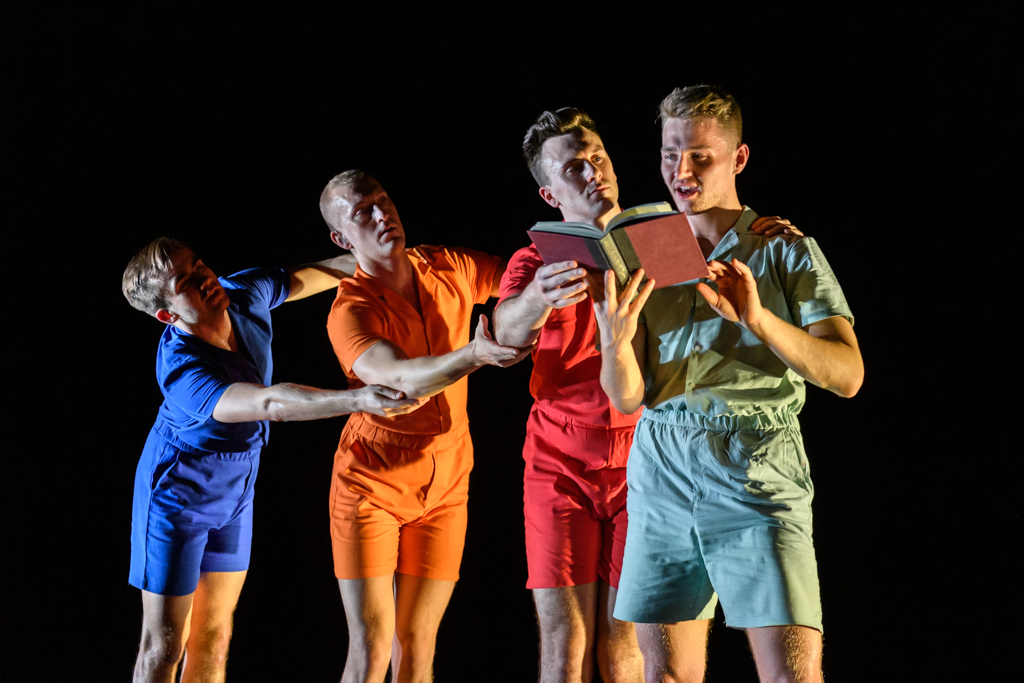
Deaf explorer supported Deaf dancers to be on the famous dance stage of The Laban Theatre. Photography by Jane Hobson.
‘An absolutely brilliant evening. So much better than I had anticipated. Not sure really what I was expecting. The choreography was great and the four dancers were excellent. The three pieces were informative, witty and beautifully presented. The set and props for TEN and the matching suits were stunning. I hope to see this company again.’
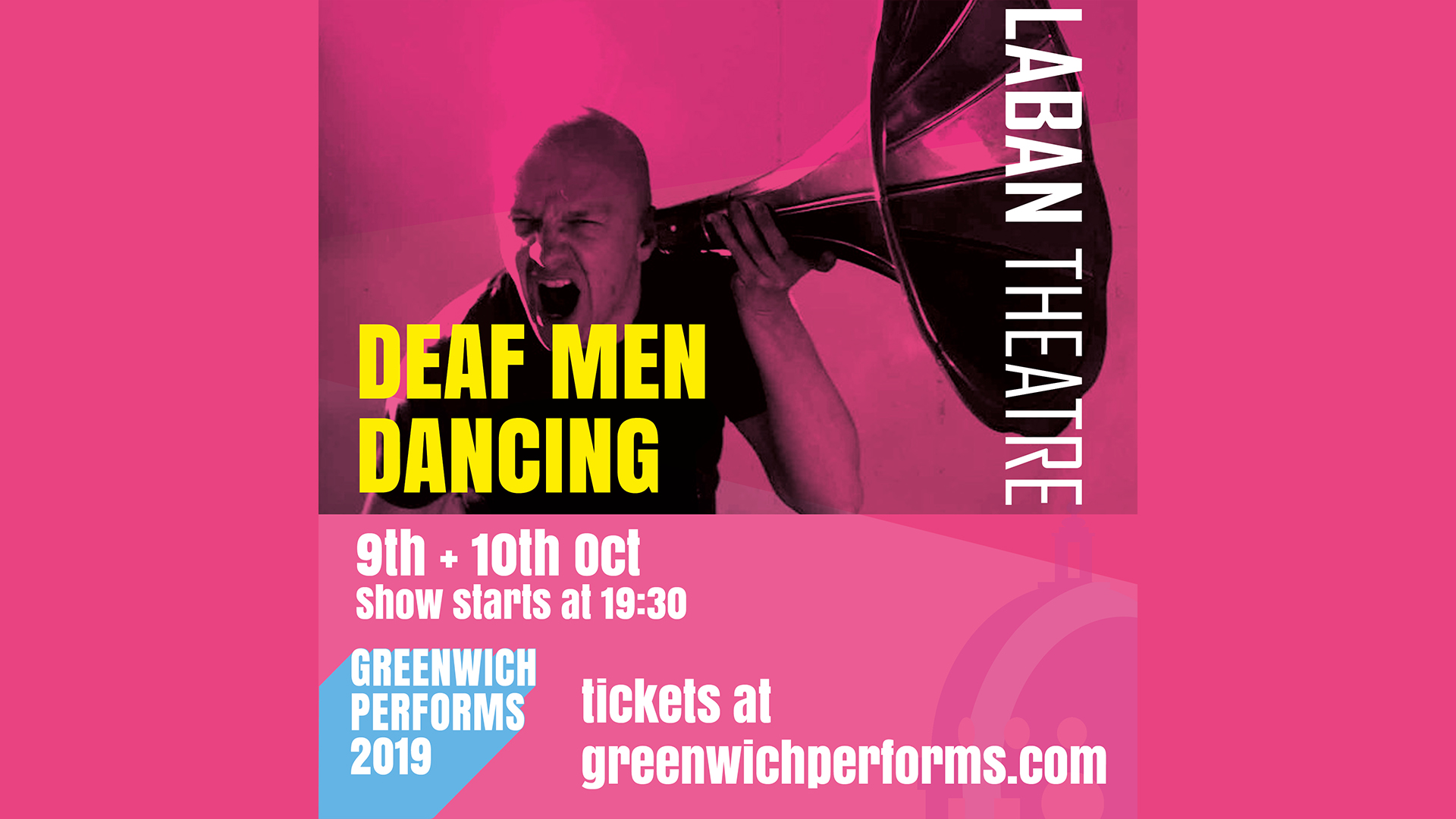
Deaf Explorer and Greenwich Performs commissioned “Deaf Men Dancing”. Choreographer Mark Smith & Assistant Choreographer Joseph Fletcher successfully re invented the dance company with new dancers Joshua Cantril, Joseph Porton and Aaron Rahn.

 Audience Feedback describes Rinkoo’s achievement “Rinkoo told his story with an engaging mix of humour, characterisation & first-person narrative. Really Effective, Really Enjoyable.” The project focussed on R&D and Professional development. The aim was to provide Culturally Deaf artist Rinkoo Barpaga, who uses British Sign Language the opportunity to write his own play. In 2017, Rinkoo made “Am I funny” The life and signs of a Deaf comedian” Rinkoo worked with a number of hearing playwrights, and felt he did not have ownership of the creative process. In this project, Rinkoo wanted to tell a contemporary urban Deaf story. Audience feedback said “Like the representation of deaf different background experience in Uk” Rinkoo was mentored by playwright Andrew Muir. Andrew’s process is to ask emerging writers real life questions, Rinkoo found the questions unexpected. The result of this process was many stories, and lots of material for the rehearsal studio. Two questions came out of the research: 1)Who am I, 2)Where do I belong. The questions also overlapped. Using this research Rinkoo went into the “Rehearsal process”, to find and make the play, this was a new and demanding experience for Rinkoo Barpaga. His artistic and access team of Interpreters acted as critical friends continually challenging Rinkoo so he could find the play, Made in India Britain amongst many other stories Rinkoo wanted to tell. In preparation he devised scenes that would entertain his audience. He saw these scenes as distinct and not part of a whole play. He created dynamic scenes with vibrant characters, he used his process for making Stand up comedy. When Rinkoo worked in the rehearsal studio with Director Daniel Bailey this process was critiqued and Daniel Bailey cut out scenes that did not answer the two questions. Rinkoo learnt that making theatre was not the same as making stand up comedy. He learnt when to use his stand up comedy skills when making theatre. Audience Feedback said, “Love how you add humour into sad story” He learnt about making theatre with a story arc. This feedback from audience captures Rinkoo’s learning on this project that transformed Rinkoo from Stand Up comedian to emerging playwright. “It is visual – flowed from one story to the next. You had a theme running through that linked your experiences” Later in the Rehearsal process Director Daniel Bailey moved towards one question to give the play greater focus for the audience. Rinkoo learnt that a scene that made people laugh or that was emotionally poignant could be cut if it did not have a connection or answer the question. By using the subject of himself to write a coherent play Rinkoo learnt an entirely new creative process. Daniel Bailey said that if Rinkoo wants to perform one-man show he has to stick with one interpreter for voiceover throughout rehearsal also on the stage. The creative process is so much about the language – BSL & urban sign language, it is this language that is celebrated and represented in front of audiences. Rinkoo learnt his theatre making process is not about aping English script writers, but involving a creative team that includes experienced access workers. Rinkoo says, “I have learnt so much throughout a year for the develop script and rehearsal.”
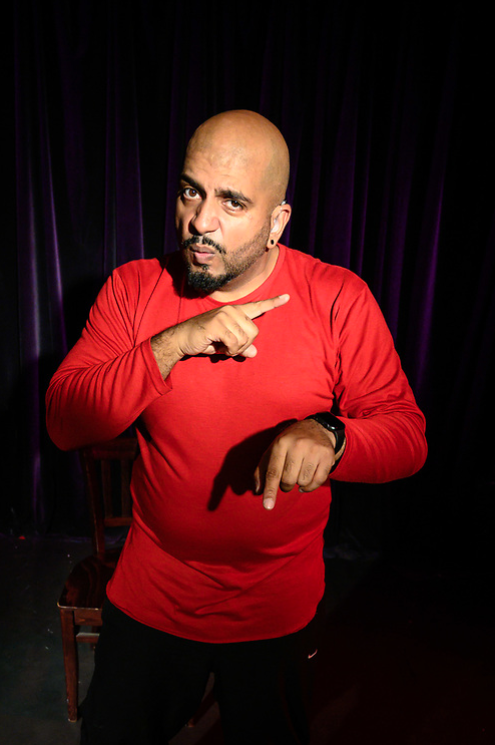 On the first day of the Studio Development that would transform Rinkoo Barpaga’s script into a piece of theatre Daniel Bailey said, “You are now going to make work for an historically under represented audience, you are the person with the lived experience to do this” The rigorous critique by Daniel Bailey challenged Rinkoo Barpaga, leading the Deaf artist to depend less on the support of note taker Andrew Muir & drive forward the creation of Rinkoo Barpaga’s BSL script rather than dependency on English script. Daniel recognised the importance of Rinkoo Barpaga’s first language to be central to the creative process as well as the acting of Rinkoo Barpaga. The research period was prolific with Rinkoo mining his past experiences, especially the memories of discrimination and the impact on Rinkoo Barpaga’s psyche. It’s a Deaf story about double discrimination that needed to be told. The 1 to 1 support that Daniel Bailey gave to Rinkoo Barpaga enabled Rinkoo to learn about making theatre. Rinkoo tells one story, & delivers one play for audiences. This ground breaking for Rinkoo who writes stand up comedy for instant reactions from the audience. The difference in opinion about editing scenes continued right up until the presentation of the work to audiences at Foundry Festival. Rinkoo found great learning in the editing process, because it greatly challenged how he had made work for audiences before.

 Deaf Explorer