• Finn’s Ballet of Plastic – a proposal to Manchester Science Festival

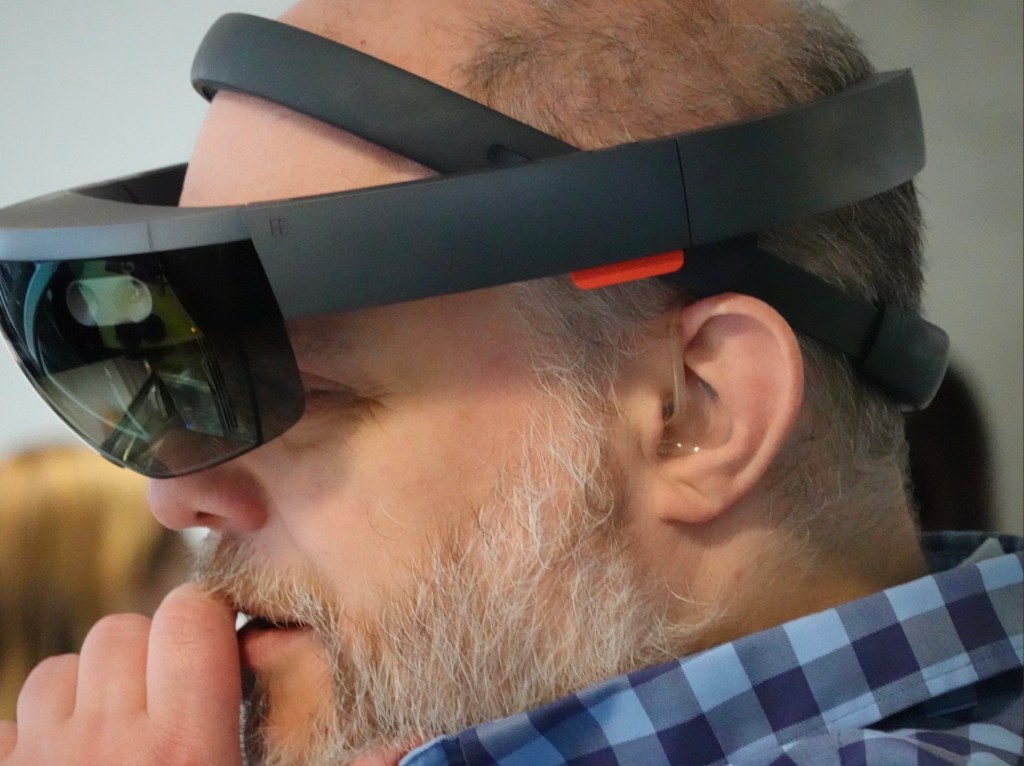
    Haptic Fish Tank/The Ballet of Plastic:

    They key elements to this project: 

    1. The relationship and interaction that users will have with the fish and their different behaviours (the fish represent the rest of society).

    2. Using immersive and haptic technology to highlight a deaf-blind perspective.

    3. The change in the environment when the fish tank is overwhelmed by plastic

    Here’s Finn’s proposal: 

    Haptic Fish Tank/The Ballet of Plastic:

    No written words or voiceover..

    The wonder of the Fishes.

    You build a relationship with the fishes.. The main fish would nudge you to the feeding station with haptic machine.. you would feel the pecking from the fishes through the machine.. I need to create a sense of calmness, a sense of wonder.. with fishes swimming around you.. some would interact with you, They acknowledge you..

    The destruction… The over fishery..

    A hook lowers, all the fishes look at the hook curiously.. The hook jerks up and down teasingly.. One fish takes a bite.. that very same fish you interact early.. you watch it yank up violently. Suddenly many hooks of various sizes drop down greedily.. Every fishes one by one yanks upward till no more fishes.. The mood changed, room darken even more.. music blaring out with a claw crashing into the seabed searching, nets thrown in ripping. swiping snatching and mauling every part of the seabed searching for one ounce of life.. 

    A Sharp Silence.

    The Dance of Plastic. Throw away culture.

    You looking up and you see a single toothbrush floating down to the tune of a sweet music, Ballet type of music,

    The brush stabs into the bed upright, then you see some more toothbrushes float down, it become poetically and musically beautiful, You see the sea bed full of upright toothbrushes like a little forest.. then you see packet of crisps floating, spinning down to the music, it lands on top of the toothbrushes smothering  all over.. and again you see plastic bottles coming down.. the music ends you see pile and pile of plastics on the seabed..

    According to the report, there will be more plastic than fish in the ocean in thirty years time..

    It has to be choreographically tuned to music.. 

    Now it is true I am deaf and I don’t have a real understanding in music..

    But all people have their own rhythmically beats in our body.. According to someone.. 

    mine is shite hot (!)

    Deaf people can enjoy music through sounds and beats. 

    I want it to be visually musical.. Ballet type of music.. 

    The first moment of the toothbrush dance.. you would looking up.. can you imagine thing.. dancing from above slowly down to the seabed.. as soon it stabs into the seabed, you would see more toothbrushes floating down in cool formation like Synchronized Swimming but more gracefully..

    So it is three scenes..

    1. The fragile of the ocean.

    2. The over fishing

    3. Throw away Culture..  

    Articles for Reference
    We are turning our beautiful Ocean into a plastic soup.
    https://www.oceanunite.org/issues/marine-plastic-pollution-2/

    Seabed trawling, a weighted net on the seabed dragging everything rocks, corals, fish, crabs etc..
    https://en.wikipedia.org/wiki/Bottom_trawling

    Bycatch.. catching the wrong kind of fishes that had to over fishery..https://en.wikipedia.org/wiki/Bycatch

    Thank you to producer Harmeet Chagger-Khan

    @HapticFinn

    R&D supported by Unlimited and Coventry University
    Unlimited is an arts commissioning programme that enables new work by disabled artists to reach UK and international audiences.

    Unlimited works with disabled artists from all over the UK – England, Wales, Scotland and Northern Ireland – and offers funding for research and development, to make small and large-scale projects happen in the UK and around the world, and awards for emerging artists who are new to art, early-career or haven’t had reached large audiences yet. They also fund full commissions (from an artist’s idea through to its realisation and touring) and commissions created through international collaborations.

    From 2013-2016 Unlimited supported more than 2,300 days of performances and exhibitions by disabled artists, which were seen by over 130,000 people.
    https://weareunlimited.org.uk/about-unlimited/

  • Maral Mamaghanizadeh describes her successful application to Steamhouse the Birmingham maker space

    I have just completed my first Arts council commissioned R&D project; “If you want to be alive…read my lips” which was a project grant of £15,000 to research and work with bone china and be mentored by a bone china artist to use the material to make decorative ear jewellery that is designed to be worn and enjoyed, but the experience of wearing the jewellery is to give the wearer an experience of hearing loss and gain greater empathy and understanding of the Deaf community. STEAMhouse enabled me to host a ‘happening’ event to the STEAMhouse and wider deaf and artistic communities to wear my jewellery and take part in an event that tests the effectiveness of the jewellery and gain feedback from creatives. I have been invited to lead similar event at Autograph gallery in London, once COVID-19 restrictions have been lifted. I received an arts council ‘Developing your creative practise’ (DYCP) grant at the end of 2019 and it for the duration of this grant that I would like to work at STEAMhouse. The aim of the DYCP is to give me time to test more materials and to develop my jewellery making and develop accompanying workshops and happenings as these events will be essential to developing a sustainable income as an artist. My aim is move from part-time to a full-time jewellery maker and visual artist and to continue to develop my artistic polemic, The Politics of Voice. The Politics of Voice was developed as a response to the oppressive societal control in Iran, where I was born and raised, but as a result of this work, I have been forced to leave Iran and seek refugee status in the UK and now have permanent leave to remain. As a profoundly Deaf artist who cannot speak, I intend to make work that is both innovative and provocative, pushing the boundaries of materials such as bone china to create beauty, but also to inform society of hidden oppression of women and in particular Deaf women. STEAMhouse will enable me to continue to develop my research using human hair as my primary material, but to expand the range of materials I can blend hair with, creating challenging and personal jewellery.  I am particularly interested in the the 3D printing workshop and the wood workshop as my aim is to work with both organic materials, such as hair and wood, but to blend these with 3D printing techniques. I am also keen to tap into a community of innovators and makers at STEAMhouse and feel I am just starting to meet artists at STEAMhouse. Joining STEAMhouse in December has revolutionised my practise, collaborating with Sarah and exploring weaving techniques with her. I would like to rejoin and continue my membership to enable me to expand and develop The Politics of Voice, weaving and carpet making with migrant and refugee women using human hair and non-traditional weaving materials.

    STEAMhouse is a centre for innovation, creative thinking, prototyping and business development. Based in the heart of Digbeth, STEAMhouse supports entrepreneurs, sole traders, companies and citizens to build their businesses, develop products and services and bring amazing new ideas to life.

    Powered by Birmingham City in partnership with Eastside Projects and funded by the European Regional Development Fund, we’re driving innovation and research for major long-term growth across the region.

    We bring inventors, artists, entrepreneurs, academics, designers, engineers and innovators together to develop exciting new ideas, products and services and explore how digital technologies can play a role.

    Find out more about Steamhouse by downloading our information pack HERE.

  • The Limping Chicken, The world’s most popular deaf Blog, writes about Billy Read in Lockdown

    Billy Read: How lockdown changed my lifestyle – plus tips for staying positive, Reflecting on the current lockdown due to covid-19, as a deaf person, it’s made me realise the importance of video calls to stay in touch with friends and family. I use WhatsApp video and FaceTime and sometimes I use Zoom. Read more using the link above.

  • The Limping Chicken The worlds most popular deaf Blog writes about Billy Read in Lockdown

    Billy Read: How lockdown changed my lifestyle – plus tips for staying positive, Reflecting on the current lockdown due to covid-19, as a deaf person, it’s made me realise the importance of video calls to stay in touch with friends and family. I use WhatsApp video and FaceTime and sometimes I use Zoom. Read more using the link above.

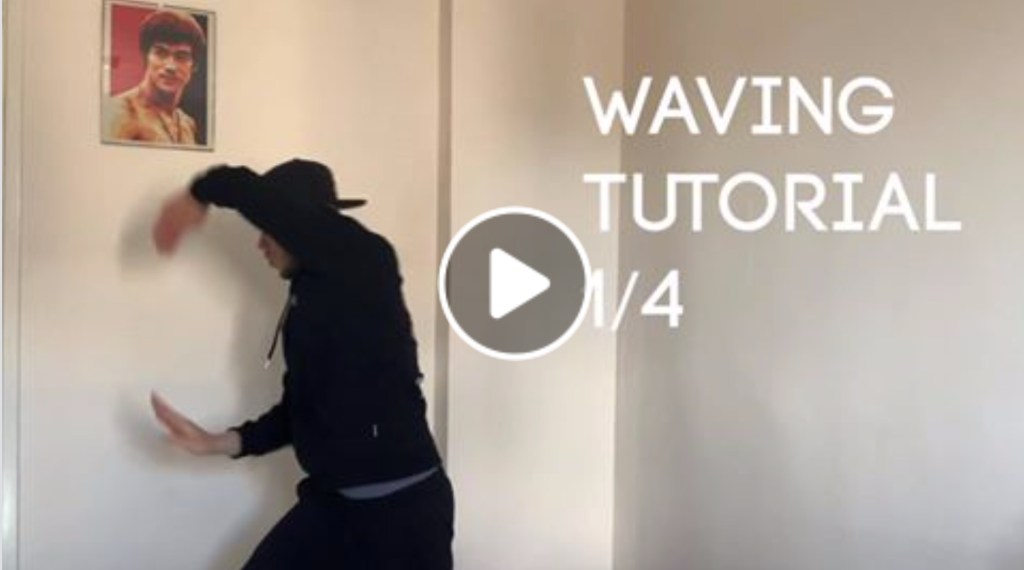
  • Billy Read Kinetic Connectivity – Deaf Street Dance in Lockdown

    Lockdown for Deaf young people is more challenging than for hearing young people. The majority of Deaf young people are born to hearing families forced to follow an ‘oral’ method of education, reliant on speech and lipreading. Social distancing for Deaf young people is double isolation; they often cannot communicate with parents and siblings in the family home to any great degree, often travel long distances in taxi’s to attend specialist educational provision, resulting in isolation from their neighbourhood peers. During this time of social distancing, they have lost both their education and social opportunities. Literacy levels are traditionally behind hearing peers of the same age so written information inaccessible. 

    There are currently no Deaf accessible dance sessions for young people in the Black Country and anecdotal evidence from young Deaf people is that they feel unable to participate in activities with hearing children as they cannot always follow instructions and feel left behind. They feel excluded socially in mainstream groups as hearing children are not supported with skills for inclusion. Deaf young people often drop out of activities, losing confidence to join any further arts activities for fear of repeating the same experience. This leads to lack of self-esteem and self-confidence.

    Due to a lack of accessible information during “lockdown” about community initiatives to improve well-being and strengthen mental health, Deaf people either do not receive information or it is delayed, for example, exercise sessions on Instagram, by Joe Wicks have gone viral during lockdown, proving incredibly popular with families and young people. However, Deaf families on social media, have complained  these activities are inaccessible for Deaf young people. I aim to challenge this.

    Go to Billy Reads Deaf Motion Facebook page:

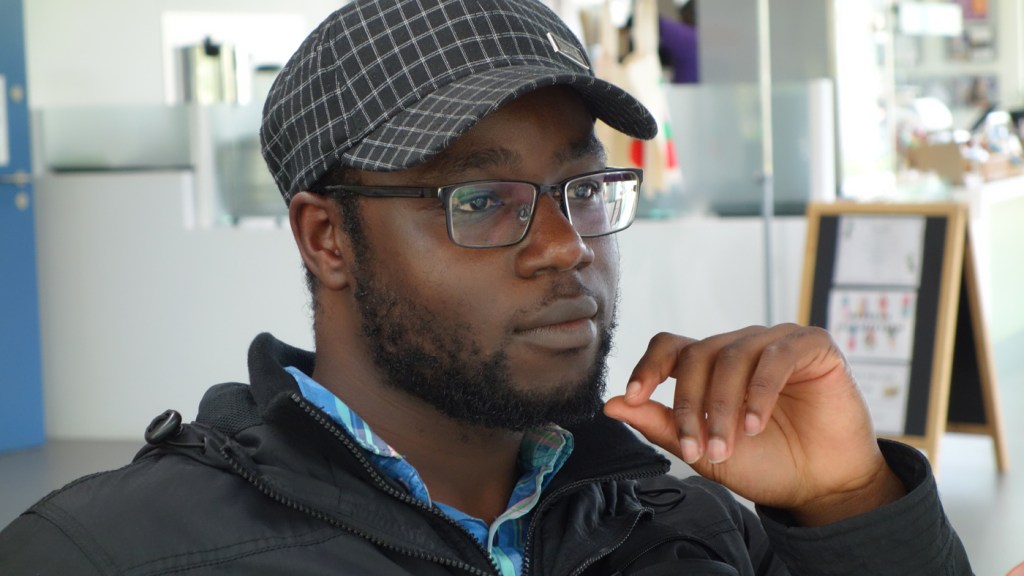
  • Tolu Sholanke tell’s Deaf explorer about a grant for his photography

    The Arts Council England grant “Developing your creative practice” DYCP made a big impact. I could go out & meet people & tell them that I had a degree in photography & an Arts Council Funded grant to research photographing people that represented my community in Manchester. My DYCP proposal was ambitious because I would move from a place of comfort – my studio, making miniature diorama’s to that of interaction & engagement with Nigerian Community in Manchester.
    I began my research as planned with at, ”Mothers church the Deeper Christian Life Ministry” My aim was to build my confidence with familiar faces, however I found that the opposite was happening & I did not feel comfortable photographing the community that I knew & that was part of my life. This was unexpected, I moved quickly on & began to research groups originating from Nigeria living in Manchester. I attended African Mass at Salford cathedral to continue to research into Christian African community in Manchester.


    My first major photoshoot of my DYCP project.Oct 13, 2018 at the Nigerian Women’s Group Fundraising Dinner – Black History Month / Nigerian Independence Celebration. To my surprise, at the fund-raising dinner I met people interested in my wish to be a professional photographer. All wanted to help & all were networked into the community that I wanted to photograph. Afterwards I found myself invited to every African event, making the project more inclusive & creating wider participation in the photography project. At a dinner of Nigerian women at West Indian community centre in Moss Side, I met community peace activist Dr Erinma Bell MBE. Introducing myself to people as a photographer with a grant to research, gave me great confidence & I believe it also opened many doors both in the Nigerian business community. For example I attended Celebrating Cultural Differences, in Rochdale, & for example in the arts, I attended all the Afro Jam Planning meetings & photographed the event that was in collaboration with Manchester International Festival.

    Visitors to Afro Jam, Manchester by Tolu Sholanke 2019

    When I had produced a few photography books notably Dumpton. Before my DYCP grant I was isolated from the arts and isolated from the African community except for my attendance at church on Sunday, friends of family kickstarted my meeting with Nigerian Women’s Group Manchester. I am now mixing with the movers and shakers in Manchester’s African community, Business leaders, community organisers, performers, and makers.

    Tolu Sholanke

    I learnt that the people I met did not use social media platforms like instagram and twitter or facebook for promoting their community activities, so I did not focus on these platforms with my building of networks, everyone enjoyed face to face meetings and there was plenty of opportunity, throughout my DYCP. I learned that in Manchester there is an active African community that are delivering projects with Heritage Lottery funds and collaborating with Manchester International Festival. Amongst the community is an ambition to improve the lives of young people and children and give them a better sense of belonging and identity, so they understand more about their culture and origin. As a photographer I found I was of value to the community because I was attaching importance to heritage and culture of the community; I would also mix well with the young people and I was a role model. The DYCP also enabled me to try new technical skills, inspired by masterclass’s in photography at Blast photography Festival West Bromwich for example burst photography to make gifs and photo books. I also used new techniques when shooting, creating videos and gifs of performances and community dances. I met people from the African community who were tremendously supportive, however everyone I met would of benefited from Deaf awareness training. I felt I was providing Deaf awareness. I changed perceptions of Deaf people by demonstrating that Deaf people of colour can get degrees, work as a photographer, and run workshops with elders, children and young people.

    Tolu Sholanke

    Take a look at photographer Tolu Sholanke photo stories:
    https://steller.co/africanboy

  • Creative Communities – Connecting people and places

    Creative Black Country (CBC) are offering small commissions of £500 – £2000 for projects that develop creative activity with and for local communities in the Black Country to make connections and support local people during these extraordinary and difficult times. Inspired by the positive responses around the world from balcony singing in Italy to digital choir platforms and #lockdownkitchendisco, we are looking for creative responses to the social distancing challenge which bring fun, joy and creativity to local people in the Black Country, and keep people connected.


    Creative Black Country (CBC) work with communities in Dudley, Sandwell, Walsall and Wolverhampton to explore and develop new creative projects with local people in the places where they live.

    CBC aim to support communities to co-create new work with us that is relevant, authentic and genuinely participatory for people living in the Black Country. We also offer support to help communities to develop their skills and confidence in building creative and cultural activities*.

    *Our definition of creative and cultural activity is really broad, and includes any opportunities for local people to explore their creativity through any of the following; performing arts, dance, theatre, music, visual arts, painting, sculpture, photography, design, crafts, heritage, museums, literature, poetry, storytelling, film and digital media.

    The first deadline for submissions is midday Monday 13th April. There may be additional rounds, depending on the initial response to the call, budget capacity and current situation.

    UPDATE we’re hosting an informal ZOOM chat Q&A on Monday 6th April at 4pm for anyone interested in finding out more or asking questions. Here’s the LINK.

    Who and what we can support

    The Creative Connections programme supports activities that increase opportunities for people to experience great creative and cultural experiences in Dudley, Sandwell, Walsall and Wolverhampton, by bringing individuals together to share new experiences around the arts, with creative solutions to the requirement for social distancing.

    We are not prescriptive about how this is done, it could be a digital or analogue solution, or a combination of both. What is important to us is that local people are involved in the design and delivery of the project, and that it reaches people who may not normally have this kind of creative opportunity.

    Our Creative Advisers are available to support you in developing and planning your project ideas. Anyone can ask for support from our Creative Advisers, you don’t have to have a formal group or have a fully formed idea, just a desire to do something creative in your local community and they could help you to develop it into a proposal.

    We can invest small sums of cash, up to £2000, to help you to test out a new creative idea with your local community or deliver a full project. If you want to apply for this commission please read the following information carefully, it explains the next steps in how to submit a proposal for support. Our Creative Advisers can help you to write your proposal.


    Your proposal for investment in your project
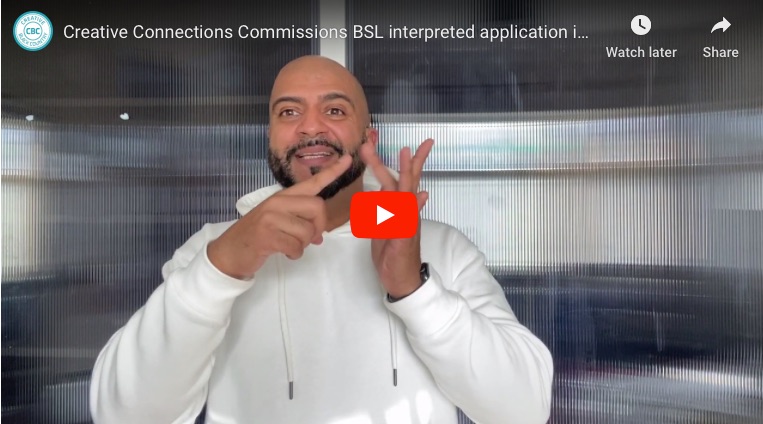
    You will need to write a proposal of up to 1000 words or create a video of up to 5 minutes long, outlining your project idea and plans and provide a simple budget illustrating how the money will be spent.

    Please include:
    Your name & contact details;
    Proposed name and title of your idea (if applicable);
    An outline of the activity taking place (who, what, where, when and why);
    How many people will be involved;
    Time frame;
    Potential outcome or benefit to the people involved;
    Amount requested (please only ask for the amount you need, don’t feel you have to request the full £2000 limit, we only have a limited budget and can support more projects if lower amounts are requested)

    Within the proposal please answer the following questions:

    • How will the project engage local people in creative and cultural activity, who do not regularly engage in the arts and culture currently?

    • How does the project involve local people in the design and delivery of the activity?

    • How will the project address the need for (physical) social distancing?

    • How will you ensure that the project provides a quality experience for participants?

    • How will you ensure your project is accessible? (e.g. if it is digital can you provide audio description, subtitles and/or BSL interpretation)

    The activity should build audience engagement for arts in the region.

    The activity must be new and must not have been previously delivered as a pilot/taster session or have already started as we will not invest in projects retrospectively.

    You will need to complete a simple evaluation at the end of the project and encourage all participants to complete a short CBC evaluation (which we will provide).

    You will need to provide basic documentation of the activity. This could be photographs, film or online documentation.

    It is your responsibility to ensure you have all the necessary consents or permissions in place to undertake your project.

    You will need to provide proof of project expenditure via the ‘expenditure form’ which will be provided to you on confirmation of our support.

    You will need to be able to start your project as soon as you’ve been informed of our decision on your proposal. We will get back to you as quickly as we can after the deadline.


    Are you eligible?  

    Support is available to individuals, groups or organisations wanting to become involved in arts and cultural activity in Dudley, Sandwell, Walsall and Wolverhampton.

    Groups and organisations must have some terms of reference for working together (i.e. a Constitution or Partnership Agreement).

    Individuals might include: 

    Artists, musicians, writers, performers, designers, promoters, producers, curators, directors;

    Collectives, consortiums and informal groups of people i.e. a performance group (one member will need to take the lead and have the main responsibility for managing the project).

    Organisations who CAN submit proposals: 
    – Voluntary organisations e.g. arts clubs, collectives, choirs or groups that meet regularly;
    – Arts organisations;
    – Public organisations such as libraries, youth centres, etc.;
    – Organisations whose normal activity is not related to the arts but who want to include arts in what they do e.g. an allotment or residents’ association; youth group, senior citizens group
    – Not for Profit organisations and community groups, whether registered charities or not;
    – Faith groups/organisations
    – Schools i.e. affiliated parent/community groups. The activity should engage the wider community and the award cannot be used to subsidise work as part of the school’s curriculum.

    Who CANNOT submit proposals? 
    The following individuals or organisations cannot receive investment form this programme:
    – Organisations that share out profits to members or shareholders;
    – University students using this grant to fund their creative projects as part of their undergraduate or postgraduate course;
    – Those running activities that do not benefit people living in Dudley, Sandwell, Wolverhampton or Walsall;
    – Activities that are already taking place or have already been completed. This must be a new activity.


    Submitting your proposal

    Submission deadline midday Monday 13th April.

    Please send your proposal along with the Monitoring form.

    By Email:  info@creativeblackcountry.co.uk with “Creative Connections Commissions” in the subject line.

    If you would like to receive a copy of the information or monitoring form in an accessible format, please contact Rosalind Argo on 07736 275547 or info@creativeblackcountry.co.uk with your requirements.


    How we decide what we will support

    Proposals for investment will be reviewed by the Creative Connections panel, which is a group of Black Country community representatives facilitated by the CBC team.

    You will be informed within 3 weeks following the deadline whether we are able to support your proposal, and we will be in touch as soon as possible so that you can begin your project if you are successful.

    If you are interested in finding out more about becoming part of the Creative Connections or Creative Communities panels please contact Rosalind Argo on 07736 275547 or info@creativeblackcountry.co.uk


    Notes

    Partnerships and working with artists: We encourage partnerships. It is a good idea to seek advice from local arts and community venues and organisations to help the activity reach more people.  We also encourage working with professional artists and naming the artist you are thinking of working with in the proposal.

    Cash and in-kind Support: We do not require any match funding for this support. However, if you do get any cash or in-kind support for your project please let us know.

    What is funding in kind: This refers to ‘in kind’ contribution to the project. For example, receiving rehearsal space without cost, expertise in voluntary time, equipment at no cost. It is great if you can tell us about any in-kind support you have for your project, and what the value of that would be if you paid for it.

    What is cash match funding:  This efers to actual cash contributions to your project received through fundraising, other grants and awards. It is not a requirement to get cash match funding for your Creative Communities project, but you will be able to achieve more and reach more people if you do. Our Creative Advisers and the local Voluntary Sector Council Development Officers are available to support you with applications to other funders.

    Rates of pay for artists: We are committed to making sure those who work in the arts and culture are properly and fairly paid. We are unable to suggest rates of pay for artists or creatives. We recommend you visit Arts Council England’s Fair Pay webpage that ontains information on where to find advice on this subject. https://www.artscouncil.org.uk/sites/default/files/download-file/ACNLPG_Fair_pay_0.pdf

    Acknowledgement of Support and Publicity: Those in receipt of CBC investment agree to acknowledge support from CBC in any publication, publicity materials, communications, website, or events relating to the project. Whenever possible, supported projects should also include the CBC logo and Arts Council England’s national lottery logo. CBC will provide all relevant logos upon receipt of support.

    Monitoring Forms: A completed copy of the Monitoring Form must be submitted with your proposal.  Download here.

    If you would like any information or advice relating to your proposal, including information on match funding, please contact us on 07736 275547.


    Contact us /send proposals to:  

    By Phone: Call Rosalind Argo on 07736 275547 and leave your name, address, contact number.

    By Email:  info@creativeblackcountry.co.uk with “Creative Connections Commissions” in the subject line.

    If you would like to receive a copy of the Creative Communities Commissions information or monitoring form in an accessible format, please contact Rosalind Argo on 07736 275547 or info@creativeblackcountry.co.uk with your requirements.

    CBC’s Creative Communities programme can also support you to plan for the future, when this current crisis is over and invest in your project….

    The CBC team are still working to support creativity in the Black Country, even though they’re not in the office. We can help you in the following ways:

    • Connect you with a Creative Adviser who can offer advice on how to get your project started and connect you with other local community groups, organisations, creatives and artists;

    • Offer advice on how to promote your project and activity to engage audiences in your area;

    • Connect you with your local voluntary sector council’s Development Worker (‘DVSC’ in Dudley, ‘SCVO’ in Sandwell, ‘WVSC’ in Wolverhampton or ‘One Walsall’ in Walsall) who can offer support on identifying funding opportunities and help you to grow a long-term strategic plan;

  • ARTS COUNCIL RELEASE Covid-19 Emergency Response package

    Please contact using form, if you require any access support to apply to Arts Council England. Follow @deafexplorer to find more of our BSL information videos. DEAF EXPLORER want to support Deaf artists over this difficult time.

    Image from

    Deaf Explorer Provide BSL information about Arts Council Emergency Response for Artists


    ← Back

    Thank you for your response. ✨

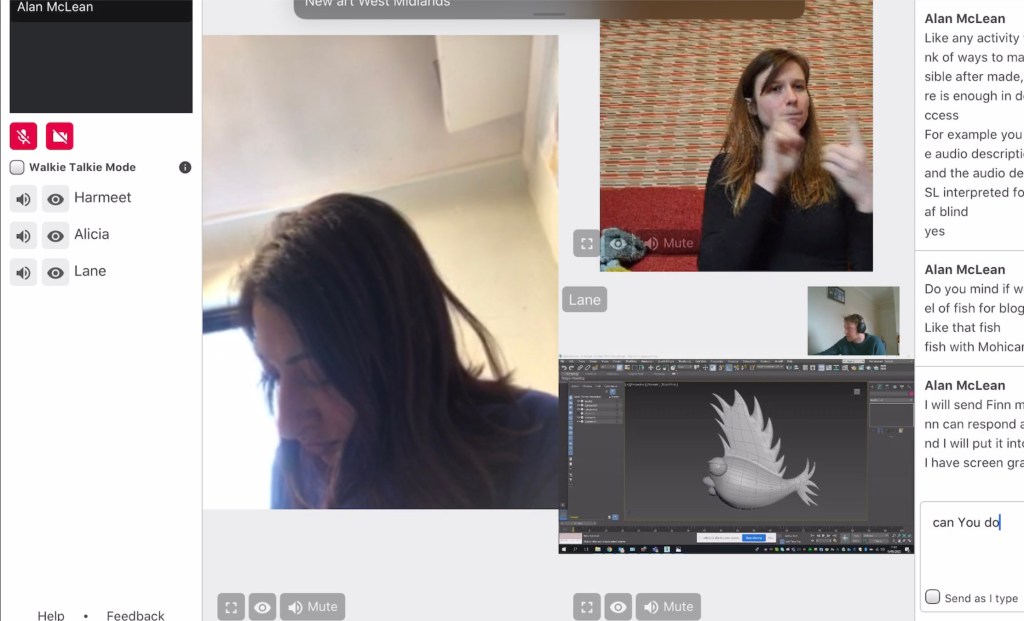
  • Brilliant – Finn describes his First Video Conference call

    Meeting began with discussion about current situation (Covid 19) and impact on project.

    Harmeet 

    Recommended continuing with the development process with same objectives and outcomes. This was agreed.  Later the discussion separated the development process from the presentation process to audiences – that would be affected by Covid 19, so the team could focus on the development r of the project.

    Richard

    proposed developing a Mobile version for iPad

    Michael

    Posed question – How can we change what we doing.  How can we adapt, we are adapting to Finn’s disability, similarly we can about to the virus, it is not a difficulty. We can report on the adaptation we will make.

    Finn

    Covid 19 is something we have to prepare for, to make the whole project future proof. 

    Richard

    Until we almost finish project the route is the same.

    Richard

    It is successful the online meeting ?

    Finn

    Yes, Brilliant,

    Richard

    When we advance the project and bring the elements together will be more tricky to test remotely with Finn online.

    Meeting ends

    Find out more @HapticFinn

    Finn pioneered the use of motion capture technology to animate British Sign Language. Founded Dead Media films. Finn now wants to be a pioneer in haptic art.


  • Mark Smith Productions Hut 8 Tour pack supporting videos

    3M Maths, Movement and Music
    Studio R&D October 2019, Union Theatre

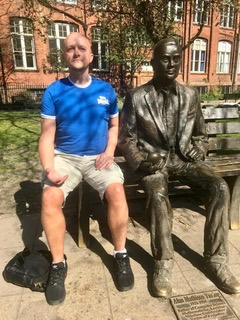
    Mark&Alan Turing Statue Manchester
    Mark Smith, with sculpture of Alan Turing  near Canal Street, Manchester

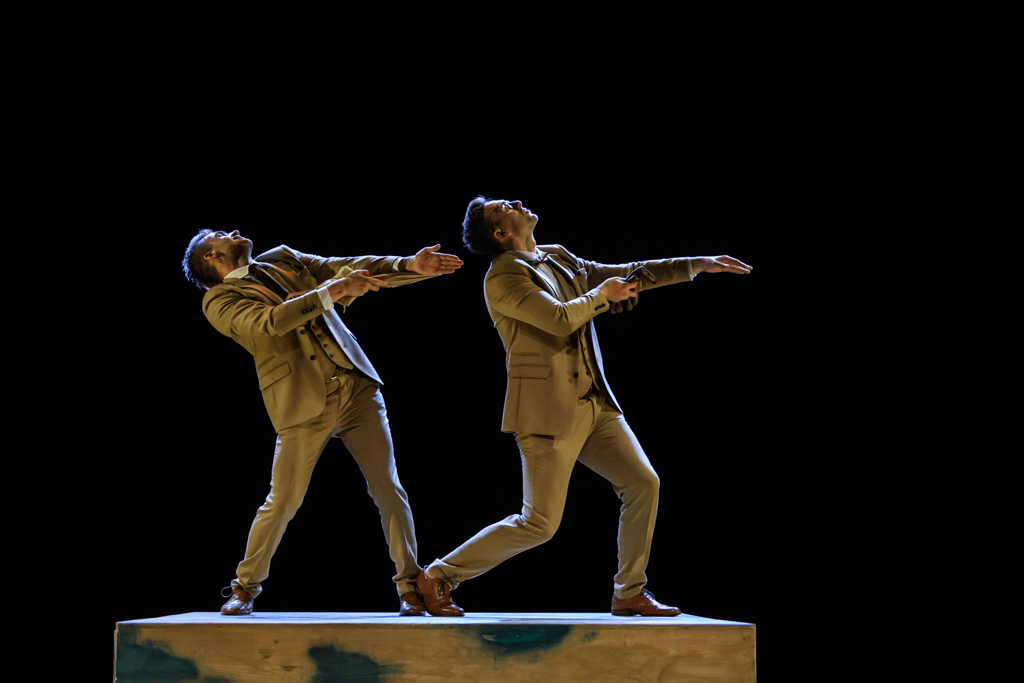
    I am exploring something new in my work as a choreographer. Using Alan Turing as inspiration; it has been a different method of working for me as a choreographer. When researching Turing’s machine; I was getting inside Alan Turing head as if he is the choreographer or director. Asking myself, what would he do, what would he do as a director?  how would he create a dance production? I found this to be a very unique way of working as a choreographer and director. I have learnt a lot. I am not a math’s person; it is not my strong point! By using books about Alan Turing, I have learnt so much about math’s. My interest in math’s has grown so much. I now have a lot of respect for Math’s work; the theory of it.  Now my view of choreography has changed so much. 

    Documentary Promo by Ben Simmons about 3M Studio R&D in October 2019


    Studio R&D February 2019

    Turing’s Law

    During the R&D of Turing’s Law, I was supported by Opening Doors a charity supporting older LGBT people. In February 2019 Mark Smith interviewed Gay men, who experienced life in Britain after partial decriminalisation in 1967. In 2009,  British Prime Minister Gordon Brown made an Official public apology on behalf of the British government for “the appalling way he was treated.” The collaboration with Opening Doors  resulted in a sharing of the Hut 8 R&D at Studio Voltaire in February 2019 and Tate late in April 2019. GSV in the dance performance made an emotional connection to an LGBT audience. They loved the GSV and laughed. I found out that the GSV was really funny and that it really works in the choreography. I want to do more of that. I normally use Sign language in my choreography so GSV is a new language for me to put in my choreography.  


    Studio R&D September 2018

    Turing’s Machine

    In Turing’s Machine, Mark Smith is inspired by the algorithms Turing devised, ” I have learnt so much through the support of the dancers surrounding me. I brought Alan Turing books to the dance studio, each book had post it notes highlighting illustrations of formulas and diagrams of machines. Together we had to work out, how does Alan Turing’s machine work. And how to recreate it in a physical way. I struggle to comprehend when reading about Turing’s machines in a book,  but to see it visually with the dancers was really helpful.  It made sense to me. It was much more clear for me as choreographer choreographing Turing’s bomb machine. I found during this R&D the technical way I would involve dancers to represent the bomb code breaking machine in HUT 8 Production. During the R&D week for Turing’s Machine I worked each day with Audio Describer William Elliot. Now het understands the process I will invite him to Audio Describe Hut 8 Production.”


    Studio R&D August 2018
    Turing Letter

    Choreographer Mark Smith fictionalises Turing using Polari the code language of gay men before the legalisation of Homosexuality. In his 2018 R&D Mark collaborated with Daryl Jackson to mix Polari with Gay Sign Variation (GSV), to reveal Turing Letter a two hander, that also incorporates Turing’s visual and systematic methods for remembering ideas.

    “During Turing’s letter I collaborated with Daryl Jackson who worked with me on the translation of BSL of the letter Alan  Turing wrote to the mother of Christopher Morcom, following his sudden & early death. In the Studio working with the dancers I found the translation of words into a visual form to be a very strong idea. GSV Gay Sign Variation is connected to Polari a secret language used by gay men in the 50’s and 60’s.  I’ve used BSL in my choreography before. In Hut 8 production I will use Gay Sign Variation which is a new exciting language for me to incorporate into my choreography. Polari & GSV is a language that died out when homosexuality became legal in 1967. “